


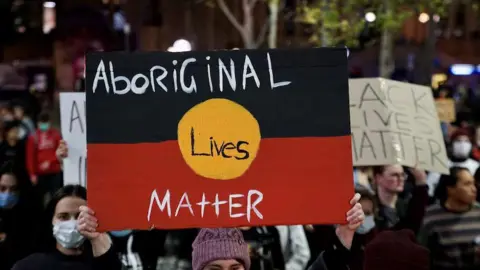
The count of Indigenous people losing their lives while in custody in Australia has hit its record point since official data began in 1980.
Recently released data show that 33 of the 113 individuals who died in custody in the 12-month period ending in June were Indigenous. This represents an rise from 24 fatalities in the preceding equivalent period.
Indigenous Australian people are severely overrepresented in the criminal justice system. They make up over 33% of all prisoners, despite representing under 4% of the national people.
These sobering figures emerge more than three decades after a pivotal royal commission into First Nations deaths in custody, which put forward hundreds of proposed changes.
Breakdown of the Recent Statistics
Of the 33 Aboriginal deaths in custody logged between last July and this June, 26 took place while in a correctional facility, which is an rise from 18 in the prior year.
One death was in youth detention, and all except one of the individuals were men.
The other six fatalities happened in police custody, defined as when someone dies while police are detaining them.
The primary cause of Indigenous deaths was classified as "self-inflicted," followed by "illness." The data found that asphyxiation was the method in eight of the deaths.
State-by-State Distribution
The state of New South Wales had the greatest number of Indigenous deaths in prison custody with nine, followed by Western Australia with six. Queensland, South Australia, and the Australian Capital Territory each had three deaths.
The growing number of Indigenous deaths in custody in New South Wales is a "profoundly distressing milestone," the state's coroner has stated.
In October, Magistrate Teresa O'Sullivan stressed that this upward pattern was not "just statistics" and that these deaths demanded "thorough and careful examination, dignity and responsibility."
Demographic Details and Academic Reaction
The mean age of those who died was 45, and eleven of the individuals were still waiting for a court sentencing.
A criminal law associate professor, Amanda Porter, described the figures as representing a "national emergency" that requires "leadership and political action."
Ms. Porter, who has attended multiple coronial inquests with bereaved families, stated very little has changed since the 1991 national inquiry that aimed to address this issue.
"It's infuriating to witness the number of investigations I attend, the number funerals families have to attend, and the fact that we are 30 years past the inquiry, and the situation is getting increasingly more severe," she noted.
From the time of the landmark inquiry, a total of 600 First Nations people have died in detention, which encompasses six in juvenile detention centers, according to the report.


